Overview
Pezhman Farhangi (born 1991), who performs under the stage name Peter Far (PRS), is a self-taught musician, guitarist, composer and sound artist based in London, United Kingdom. He is best known as the founder and sole creative force behind IUS (registered trademark I/US Music®). His work blends atmospheric, acoustic-electronic textures that are well suited to film, television series, video games, trailers and visual art installations. Peter writes and masters his music independently and retains full ownership of his compositions and masters. He is a member of the Musicians’ Union (UK).
Early Life and Career
Before focusing on music, Peter studied civil engineering and later pivoted to pursue his passion for sound. He adopted the stage name “Peter Far” to create a streamlined, internationally recognisable identity. In April 2025, he registered the name I/US Music® in the United Kingdom (UK00004243563), covering services including composition, recording, production and performance.
Musical Style and the IUS Project
Launched in April 2025, IUS is a solo project by London-based composer, guitarist and sound artist Peter Far. The catalogue focuses on dark, atmospheric and progressive rock with cinematic and contemporary classical elements, written primarily for recorded release and potential use in visual media. The works range from short cues to longer, structured pieces suitable for film, series, games, trailers, installations and other screen-based formats. Peter oversees composition, arrangement, production, recording, mixing and self-mastering, retaining control of both the compositions and masters.
Artistic Influences
The IUS project is shaped by influences from rock, ambient, electronic and contemporary orchestral music, as well as film, television and video-game scoring. Rather than highlighting specific artists or titles, Peter focuses on form, texture and dynamics, aiming to create material that works both as standalone listening and as music for picture.
Other Projects and Collaborations
In addition to composing music, Peter is an emerging storyteller in the horror genre. He is writing a series of short horror stories and plans to adapt one into a short film. He is also developing a text-based interactive horror game with dark, narrative-driven experiences. These multimedia projects are currently in development and not yet public. Peter seeks collaborators for composing scores and co-writing narratives for films, games and interactive media.
Future personal project: O今後の個人プロジェクト:O
O is a future personal operating-system project exploring a unified environment for creative work, research and local-first tools. More information.Oは、創作、研究、ローカル優先のツールを一つの環境に統合することを探る、今後の個人向けオペレーティングシステム・プロジェクトです。詳細。
Identifiers and Recognition
- ISNI: 0000 0005 2827 1416 (assigned to IUS as a group entity, founded 10 April 2025 in the UK)
- SSRN: Author page
- ORCID: 0009-0001-0463-4583
- YouTube Channel: I/US Music®
- Official Website: iusmusic.com
- GitHub: I/US Music®
For commissions, collaborations or enquiries, please contact iusmusics@gmail.com. Based in London, UK.
Professional memberships
Composers & Lyricists
Membership
Card


Professional & Humanitarian Background
Outside of his musical career, Peter is a faith‑driven humanitarian professional with extensive experience in direct service, advocacy and community support. He has cultivated key skills in humanitarian support and crisis intervention, refugee advocacy and cultural awareness, leadership and supervision of multidisciplinary teams, data management and GDPR compliance, strong communication and interpersonal abilities, technical proficiency with Microsoft Office and livestream technology, and analytical and research approaches.
Professional Experience
- Clinic and Helpline Coordinator, Doctors of the World UK (May 2023 – Nov 2024): Coordinated multi‑agency referrals, trained volunteers, managed GDPR‑compliant casework data, and supported individuals facing homelessness, illness and mental‑health crises.
- Support Worker, Appa Me Ltd (Feb 2023 – May 2023): Supported individuals with disabilities and mental‑health challenges, fostering a safe environment and working within multidisciplinary teams.
- Veterinary Assistant, Celia Hammond Veterinary and Animal Trust (May 2022 – Jul 2022): Assisted with animal care, vaccinations, sterilisation of surgical equipment and provided compassionate care for recovering animals.
Voluntary Experience
- Voices Network Ambassador, British Red Cross (Apr 2021 – Oct 2022): Represented asylum seekers in national media and advocated for inclusion, dignity and humane policies.
- Volunteer, St Cuthbert’s Church, London (Sep 2020 – Jan 2022): Set up livestream technology during lockdown to enable remote worship and supported community connection.
- Volunteer, Little Lives UK Charity Shop (Jan 2021) and Animal Rescue Volunteer, Iran: Assisted with charity shop operations and rescued and rehabilitated cats.
Education & Qualifications
- BSc Psychology, The Open University (2023 – present).
- Level 3 Certificate in Safeguarding for Adults and Children (2023).
- Enhanced DBS Certificate (valid).
- Mandatory Health & Safety, HR and Compliance Training (Feb 2023).
- IELTS Academic – Band 7 (June 2019).
- BSc Physiotherapy, Rajiv Gandhi University of Health Sciences (2015 – 2017).
- Foundation Degree in Medical Sciences, College of Arts, Minsk (2012 – 2013).
- Certificate in Higher Education (Maths & Physics), Iran Pre‑University Centre (2009 – 2011).

Public Contributions, Proposals & Research
Peter Far (born 1991; legal name Pezhman Farhangi) is a London‑based musician, writer and advocate known not only for his work under the brand I/US Music® but also for extensive public engagement on ethical innovation, social justice and civic policy. The artist biography above outlines his musical career; this extension documents his non‑musical contributions, grouped by government and parliamentary submissions, societal proposals and civic initiatives, and technology and research projects. All dates and factual details are presented for reference.
1. Government and Parliamentary Engagement
1.1 Written Evidence to the Joint Committee on Human Rights (Nationality and Borders Bill, 2021)
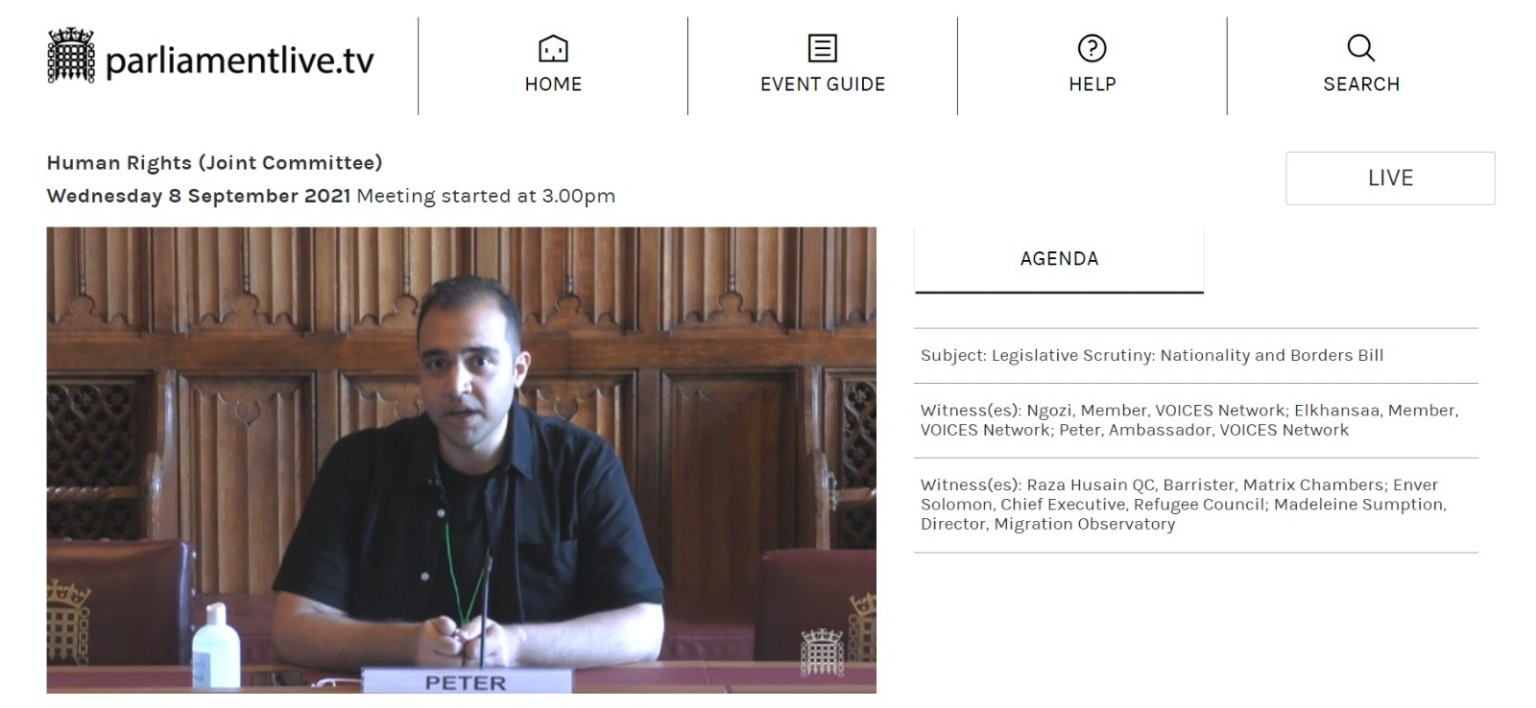
- Date: evidence submitted 13 September 2021 (oral evidence given 8 September 2021).
- Context: Peter was invited to give oral evidence to the UK Parliament’s Joint Committee on Human Rights during its legislative scrutiny of the Nationality and Borders Bill, and he submitted follow‑up written evidence to address questions not covered in the hearing.
- Content:
- He described the asylum system as hostile and dehumanising: arriving refugees were arrested, detained, lacked clothing and money and were forced to live in hotels with inadequate food.
- He criticised Home Office contractors such as Clearsprings Group, SBHL and ReadyHomes for disrespectful treatment of asylum seekers.
- The written evidence argued that the asylum process pressures people to abandon claims and keeps them in limbo without the right to work.
- He warned that the bill would criminalise refugees based on their mode of arrival and would increase delays and suffering.
- Peter urged the committee to uphold humanitarian principles, emphasising that refugees seek only safety and freedom, not charity.
1.2 Open Letter to the UK Parliament on the Iranian Regime and IRGC (20 July 2025)
- Date: 20 July 2025.
- Recipients: Speaker of the House of Commons, the Home Secretary, Foreign Secretary, chairs of the Foreign Affairs and Home Affairs committees and all Members of Parliament.
- Purpose: As a recognised Iranian refugee, Peter submitted an open letter detailing evidence that the Islamic Republic of Iran and its Islamic Revolutionary Guard Corps (IRGC) commit crimes against humanity and operate hostile activities in the UK.
- Key points:
- Documented mass killings during the November 2019 protests and the Mahsa Amini protests, citing a UN fact‑finding mission confirming more than 500 dead and hundreds shot in the eyes.
- Described abduction and assassination plots against UK‑based dissidents and recounted personal threats by IRGC‑linked individuals, highlighting gaps in police protection.
- Called on Parliament to proscribe the IRGC as a terrorist organisation, support UN sanctions snap‑back, freeze regime‑linked UK assets for victim assistance and create refuge‑protection protocols for high‑risk dissidents.
- Urged a cross‑party commitment not to negotiate with hostage‑takers.
1.3 National Security Follow‑Up Submission (11 January 2026)
- Date: 11 January 2026; submitted via email to the Home Office, Foreign Commonwealth & Development Office and select committees. A copy was also circulated to media outlets.
- Purpose: Follow‑up to the July 2025 open letter, restating concerns about IRGC‑linked threats after the Intelligence and Security Committee’s report of 10 July 2025 described Iran as a persistent threat to UK residents.
- Requests:
- Proscribe the IRGC in its entirety under the Terrorism Act.
- Support international sanctions, including snap‑back provisions, unless Iran halts human‑rights abuses and nuclear escalation.
- Establish a joint Home Office and Treasury task‑force to identify, freeze and seize regime‑linked assets in the UK and repurpose them for victim assistance.
- Create a protection protocol for high‑risk Iranian dissidents, including clear escalation pathways and support for those facing transnational repression.
- Declare a cross‑party refusal to reward hostage diplomacy.
- Emphasis: Warned that IRGC proxies use criminal intermediaries to intimidate dissidents and that an escalated risk environment requires proactive safeguarding.
1.4 Packaging‑Waste Campaign Letters (3 December 2025)
On 3 December 2025 Peter submitted a suite of letters to government bodies and corporations advocating for reuse mandates and deposit schemes for e‑commerce packaging. Each letter tackled a different audience:
- 1.4.1 Letter to UK Parliamentary Committees. Sent to the chairs of the Environmental Audit Committee, Environment, Food and Rural Affairs Committee and House of Lords Environment and Climate Change Committee. It requested a formal inquiry into the environmental and social impacts of single‑use e‑commerce packaging and the adequacy of the Extended Producer Responsibility (pEPR) reforms. Evidence cited included Amazon’s use of 74 137 metric tonnes of single‑use plastic in 2024, only 12 % of orders shipped without additional packaging, and recycling rates plateauing at about 64–75 %. The letter proposed inquiry topics such as fee modulation, mandatory reusable delivery containers, deposit‑return schemes, data transparency and impact assessments on councils and households.
- 1.4.2 Letter to Environmental Oversight Bodies. Addressed to the Office for Environmental Protection (England), Environmental Standards Scotland and the interim environmental protection assessor for Wales. Alleged government failure to comply with environmental law by allowing e‑commerce companies to continue single‑use packaging when reuse options exist; noted that pEPR shifts costs to producers but does not impose reuse obligations; and requested investigations into DEFRA’s compliance with the Environment Act 2021, as well as legislative recommendations and reuse targets.
- 1.4.3 Letter to Environmental Regulators. Sent to the Environment Agency (England), Scottish Environment Protection Agency, Natural Resources Wales and Northern Ireland Environment Agency. Urged regulators to enforce reuse obligations under the pEPR regime, citing Amazon’s continued use of 74 137 t of single‑use plastic and low recycling rates. Recommended conditions requiring phase‑in of reusable delivery containers, high fees for single‑use packaging, coordinated enforcement across UK nations, public reporting mechanisms and published enforcement reports.
- 1.4.4 Letter to the Secretary of State for Environment and PackUK. Addressed to the DEFRA Secretary of State and PackUK. Demanded elimination of single‑use delivery packaging through legislation and fee modulation; highlighted Amazon’s plastic use, flexible plastic’s unrecyclability and the limited effect of PackOpt optimisation. Proposed mandatory reusable delivery containers with phased targets (e.g., 30 % by 2027, 80 % by 2030), strengthened fee modulation, deposit‑return schemes, granular packaging data publication and strict enforcement with penalties.
- 1.4.5 Letter to Amazon UK and Parcel Carriers. Addressed to Amazon’s UK country manager and UK parcel carriers. Highlighted Amazon’s use of 74 137 t of single‑use plastic, low recycling rates (less than 2 % for flexible plastic) and that only 12 % of orders were packaging‑free. Early calls for a reusable “Prime Box” had been ignored. The letter demanded introduction of a reusable delivery system with returnable totes, expansion of Ships in Product Packaging with UK targets, deposit‑return schemes crediting customers for returning packaging, publication of audited UK packaging data, collection of packaging by carriers and support for local recycling infrastructure.
Copies of these letters were also sent to various regulators and oversight bodies to ensure wide distribution and to maximise impact.
1.5 Complaint to X and Ofcom on Reach, Visibility and Profiling
- Timeline: On 13 January 2026 Peter raised a formal complaint with X Premium Support under reference PSDM-624808 concerning prolonged restrictions on reach, visibility, discoverability and audience growth despite sustained publication of original content and paid use of platform services. On 13 March 2026 he escalated the matter by raising UK GDPR concerns about algorithmic treatment and the absence of a meaningful explanation. On 16 March 2026 Ofcom replied under reference 02174191, recording the complaint but not determining the individual dispute.
- Position: Peter’s position is that X may have used profiling or automated processing in a way that materially affected reach and professional opportunities without a fair, transparent or account-specific explanation. He also argues that the complaint handling did not properly address his data protection rights or the serious personal impact of the matter.
- Legal basis: The complaint engages questions of platform transparency, subject access, profiling and automated decision making under data protection law, together with rights under the Equality Act 2010, including the duty on service providers to make reasonable adjustments where disability places a person at a substantial disadvantage.
2. Societal Proposals and Civic Initiatives
2.1 Community Response and Support Officers / Community Support and Safety Officers (CRSO/CSSO)
- Date: concept developed March 2025 and refined in subsequent proposals.
- Purpose: Address police staffing shortages while creating structured integration roles for refugees, long‑term migrants and disadvantaged residents. The scheme merges public safety tasks with non‑clinical emergency assistance.
- Key features:
- Public safety track: CSSO/CRSO personnel manage traffic and crowds, provide public assistance in transport hubs and support crime‑scene management without access to sensitive intelligence.
- Emergency health track: Participants provide first aid, scene management and mental‑health first aid.
- Recruitment: Open to refugees, long‑term migrants, disadvantaged citizens and Commonwealth nationals; applicants undergo background checks and training in ethics, UK law and community engagement.
- Phased implementation: Pilot phase in selected urban areas; evaluation phase to refine processes; national expansion based on success metrics.
- Benefits: Reduces pressure on police, provides meaningful employment and integration pathways and improves community trust.
2.2 Community Response & Support Officers + Asylum Education Reform
This document, titled “Integrated Public Safety & Health Initiative: Community Response & Support Officers (CRSOs) + Asylum Education,” builds on the CSSO concept and emphasises an emergency health track alongside public safety duties. It also advocates for mandatory English‑language and legal education for asylum seekers before they access work, including language training, legal orientation courses covering UK laws and rights, and a statement of understanding confirming comprehension. Training is integrated into emergency accommodation, certification is required for work eligibility and continuous learning support is provided. The aim is faster economic integration, fewer legal violations and reduced dependence on government support.
2.3 Men’s Rehabilitation & Employment Shelter Project
- Date: March 2025 (business plan and presentation).
- Goal: Provide long‑term solutions for male homelessness by combining secure housing with mental‑health support, addiction recovery and vocational training.
- Scope: Initial phase accommodates 100 individuals between London and Croydon, expanding to 300 beds. Services include secure private rooms, supervised mental‑health and addiction recovery programmes, an on‑site gym and library, vocational workshops (woodworking, IT, construction and hospitality), safe consumption rooms and job‑placement programmes.
- Financial plan: Year‑1 costs estimated at £8–15 million, covering facility acquisition/renovation, staff salaries, operations and training. Funding sources include government grants, philanthropy, social enterprise revenue and NHS partnerships.
- Impact: Over five years the project aims to house and rehabilitate more than 300 residents, achieve over 50 % employment among former residents, reduce NHS emergency visits and crime rates and replicate the model in other UK cities.
2.4 Cultural Status Frameworks for Christian and Jewish Heritage
- Proposals: Two related documents propose legal frameworks to recognise and protect the cultural heritage of Christian and Jewish communities in the UK.
- Rationale: The proposals argue that as protections for minority groups expand, the cultural identity and dignity of Christianity and Judaism have eroded, creating a moral vacuum and polarisation. They seek to reaffirm shared moral roots while safeguarding free speech.
- Core principles: Recognition and respect for historical and contemporary cultural contributions; equality and pluralism (no preferential treatment); anti‑hate measures prohibiting hate speech and violence; and preservation of freedom of expression for academic debate and critique.
- Legal and policy measures: Suggestions include adding offences targeting Christian or Jewish cultural identity as aggravating factors in hate‑crime legislation, extending anti‑discrimination protections, establishing an independent oversight body and ensuring no compulsory belief is imposed. The framework is designed to scale and include other cultural identities based on contribution and need.
2.5 Humane Animal Fertility Ethics
The document “Humane Animal Fertility Ethics – Path to Better Practices in the UK” advocates transitioning from routine surgical sterilisation to non‑invasive, reversible fertility control methods. It highlights animal welfare and the need to respect bodily integrity and natural behaviour while maintaining population management. The proposal introduces a fertility control ladder prioritising non‑invasive options (Tier 1) such as oral or injectable immunocontraceptives and hormone‑free gene regulators; partial or targeted infertility methods (Tier 2) such as ovary‑sparing spays and vas deferens sealing; and surgical sterilisation as a last resort (Tier 3). Implementation strategies include pilot studies through veterinary institutions, economic modelling, stakeholder engagement with veterinary bodies and regulators, and funding through public grants and Innovate UK programmes.
2.6 Experimental Sustainable Society
Prepared in January 2026, this pilot proposal outlines a voluntary, trust‑based settlement of 100–200 adults to test whether a low‑coercion community can remain safe, cooperative and self‑reliant within existing legal frameworks. It combines minimal rules, rotating democratic councils and shared responsibility with sustainable infrastructure—modular housing, solar microgrids, rainwater harvesting and permaculture agriculture—alongside on‑site healthcare, mental‑health support and rigorous evaluation metrics.
2.7 Dual‑Role Social Framework
Issued 20 January 2026, the Dual‑Role Social Framework proposes dividing society into complementary roles: Preservers, who maintain and improve essential systems such as health, infrastructure and education, and Explorers, who undertake long‑horizon research and creation insulated from short‑term pressures. The model emphasises role‑based rights and incentives rather than geographic separation, with independent governance, peer accountability, structured entry and transition pathways and an economic and tax model that provides basic security while preventing abuse.
2.8 BREAK THE WALL2.8 BREAK THE WALL
Peter is the founder of BREAK THE WALL, an embedded, sector-specific intervention framework for removing structural blockage and creating measurable progress within a clearly defined area. More information.Peterは、明確に定義された領域の構造的な停滞を解消し、測定可能な前進を生み出すための、組み込み型・分野限定の介入フレームワークBREAK THE WALLの創設者です。詳細。
2.9 HRPP2.9 HRPP
HRPP is a future personal public-interest project. Its dedicated page contains the complete framework and supporting information. More information.HRPPは、今後展開する個人の公益プロジェクトです。専用ページに、完全な枠組みと関連情報を掲載しています。詳細。
3. Technology and Research Initiatives
3.1 Strategic Independent Research Zone (SIRZ) and FSIRCE
- Concept launch: March 2025 submission package.
- Motivation: Liberal democracies risk being outpaced by authoritarian regimes developing frontier technologies without ethical oversight; existing bureaucratic frameworks hinder critical research and create strategic vulnerabilities.
- Proposal: Establish an offshore, neutral, high‑security research enclave – the Strategic Independent Research Zone (SIRZ) – aligned with UK interests. The zone would focus on high‑risk, high‑reward research in artificial intelligence, bio‑synthetic systems, human augmentation, neural interfaces and advanced cognition.
- Governance: An internationally composed Ethics and Security Committee provides real‑time oversight to ensure transparency and ethical rigour. SIRZ is part of a larger structure – the Foundation for Strategic Independent Research & Civic Ethics (FSIRCE) – which coordinates implementation, oversight and inter‑sectoral dialogue.
- Updated submission package: In January 2026 a master document consolidated the concept proposal, governance charter, strategic access model and briefing materials into a single submission‑ready package.
- Strategic Access Clause: Defines SIRZ as the sole sovereign research enclave. External access is licensed through legally binding agreements requiring financial and operational contributions, governance participation and data‑sharing compliance. Risk‑sharing principles are modelled on CERN, IAEA and GNSS frameworks.
- Strategic Access Model: Describes a tiered licensing system where external entities obtain access proportional to their contributions and adherence to ethical guidelines. Partners must participate in governance, share risks and support operational funding. Comparative models (CERN, IAEA and GNSS) justify the approach.
- Umbrella organisation: A proposed umbrella body (FSIRCE) would act as an institutional steward providing legal, ethical and operational infrastructure for SIRZ projects. Objectives include protecting independence, facilitating partnerships, ensuring transparency and nurturing visionary projects that existing institutions might reject. Possible legal forms include a UK Community Interest Company, Charitable Incorporated Organisation or similar mission‑locked structure.
- Goals: Accelerate innovation, preserve UK sovereignty in frontier research and reinforce ethical leadership.
3.2 EVA – Offline & Private AI Robot

Project Eva proposes development of the world’s first offline, privacy‑preserving AI robot companion for home, office and assistive use. Unlike cloud‑dependent devices, EVA would operate entirely locally, providing emotional interaction, practical assistance and safe minimal mobility. Led by Pezhman Farhangi, the project envisions a UK‑based team recruiting engineering, AI and design talent and partnering with universities, research labs and local manufacturing partners. Development steps include team recruitment, design and prototyping focusing on offline AI and safe assistive robotics, integration of hardware and software for local processing and establishment of local manufacturing and supply chains. The value proposition emphasises privacy, safety and local innovation, targeting a broad customer base and aligning with sustainability goals such as responsible consumption and production.
3.3 Research Proposal – Subtle Human Attunement Through Non‑Verbal Presence
Updated in January 2026, this research proposal explores whether structured, silent, non‑visual co‑presence among strangers can produce measurable changes in subjective attunement, interoceptive awareness and autonomic synchrony. Drawing on predictive processing and active inference theories of consciousness, the proposal situates interoception as a core component of social connection. Research questions ask whether silent co‑presence increases interoceptive awareness and interpersonal attunement, whether repeated weekly sessions deepen these effects, and whether subjective reports correlate with physiological markers such as heart‑rate variability, skin conductance and respiration. The mixed‑methods repeated‑measures design enrols stranger dyads for weekly 30‑minute sessions with back‑to‑back or screened seating. Data include autonomic measures and self‑report scales. Hypotheses predict increases in reported attunement and autonomic synchrony across sessions and a positive association between subjective and physiological measures. (Paper: SSRN)
3.4 Humane Animal Fertility Ethics – Research Aspect
Beyond its policy recommendations, the animal‑fertility proposal includes a research agenda advocating multi‑centre pilot studies on immunocontraceptives, gene regulators and targeted infertility methods. These studies would assess reversibility, welfare outcomes and cost‑effectiveness, partnering with veterinary institutions and regulators. The research agenda underscores Peter’s commitment to evidence‑based animal welfare.
3.5 Philosophical Essays – Proof of Misplacement and The Pattern of the Fracture Across Civilizations
Peter has authored reflective writings exploring consciousness, misalignment and metaphysics. Proof of Misplacement argues that consciousness can perceive misalignment with deeper reality and that yearning for what is beyond structural limits is valid knowledge; it cautions that death is not a pathway to liberation. The Pattern of the Fracture Across Civilizations serves as an introductory chapter to a larger work, asserting that myths across cultures point to an ancient fracture and that readers may carry an implicit memory of wholeness. These pieces illustrate his philosophical interests.
3.6 Live Core – Field‑Confined High‑Energy Storage and Phase‑Steered Coupling System
‘Live Core’ proposes a field‑confined high‑energy storage and propulsion concept that merges flywheel energy storage, magnetic levitation and plasma‑confinement techniques. A rotating high‑energy core – either a solid rotor or circulating plasma – is suspended within a vacuum chamber by shaped electromagnetic fields rather than mechanical bearings, creating a contact‑free “electromagnetic bubble.” Timed, geometry‑tailored field actuation (“phase‑steered containment”) manages energy exchange and mitigates transients by redirecting energy into electromagnetic and electrical domains. Safety is engineered through secondary containment, touchdown systems and fault‑injection tests. The concept outlines a staged experimental roadmap and, if validated, could inform next‑generation high‑cycle energy storage, pulsed‑power buffering and momentum‑exchange systems. (Paper: SSRN)
3.7 Post‑Paradigm Framework
This 2026 update argues that quantum mechanics and general relativity are effective but incompatible approximations. Building on recent research in gauge‑field gravity and relational time, it calls for a conceptual reset in fundamental physics where spacetime and time emerge from quantum information. The framework critiques ad‑hoc patches such as dark matter, inflation and multiverse hypotheses and advocates analog experiments, quantum simulations and gauge theories as prototypes for a deeper theory.
3.8 External Cognition Modules
External Cognition Modules (ECM) are a modular, offline knowledge‑augmentation system described in January 2026. Designed as a privacy‑first ‘external brain’, ECM provides gated retrieval from locally stored domain modules through low‑friction interfaces such as voice, gaze or optional assistive brain‑computer inputs. The proposal defines knowledge‑module schemas, a secure on‑device runtime, intentional gating and work packages for module specification, secure retrieval, user interaction and optional assistive pathways, emphasising auditability and user control.
3.9 GitHub Prototypes and Future Integration
Peter’s GitHub work under I/US Music documents an expanding set of browser-based and hardware-oriented prototypes, including the IUS-DMS sequencer, the IUSV visualiser, the portable IUS-DRRP recorder and player concept, the desktop IUS-DDRP concept and the DRRPDEMO, alongside public projects covering live transcription, assistant-based songwriting, MIDI chord and piano tools, rhythmic generation and related music interfaces. Taken together, these repositories suggest a future integration path in which transcription, sequencing, harmonic exploration, rhythm generation, visualisation and dedicated playback or recording hardware can develop into a connected creative ecosystem under the wider I/US Music framework.
3.10 GCAH3.10 GCAH
GCAH is a proposed public-interest centre connecting clinical knowledge, privacy-preserving research, cultural intelligence and responsible AI for safer AI-mediated mental-health support. More information.GCAHは、臨床知識、プライバシーを保護する研究、文化的知見、責任あるAIを結び、AIを介したメンタルヘルス支援の安全性を高めるための公益研究センター構想です。詳細。
3.11 ARC3.11 ARC
ARC researches a geometric yearly clock built from 52 stations, four 13-part seasons, 12 solar sectors and a central correction cycle. More information.ARCは、52の地点、13区分から成る4つの季節、12の太陽区画、中央の補正周期で構成される幾何学的な年間時計を研究するプロジェクトです。詳細。
Peter Far’s public contributions extend far beyond his musical career. He has leveraged personal experience to highlight systemic injustices in the asylum system, campaigned for national security reforms concerning the Iranian regime, and advocated for environmental responsibility through reuse mandates. His societal proposals aim to integrate migrants into community safety roles, provide humane shelter solutions for homeless men, recognise the cultural heritage of major faith groups and reform animal‑fertility practices. On the technological front, he has drafted ambitious plans for an offshore research zone governed by ethical oversight, conceptualised a privacy‑preserving AI companion robot and developed research proposals exploring human consciousness and interoception. Collectively, these efforts demonstrate a commitment to ethical innovation, social justice and civic engagement.
Portrait